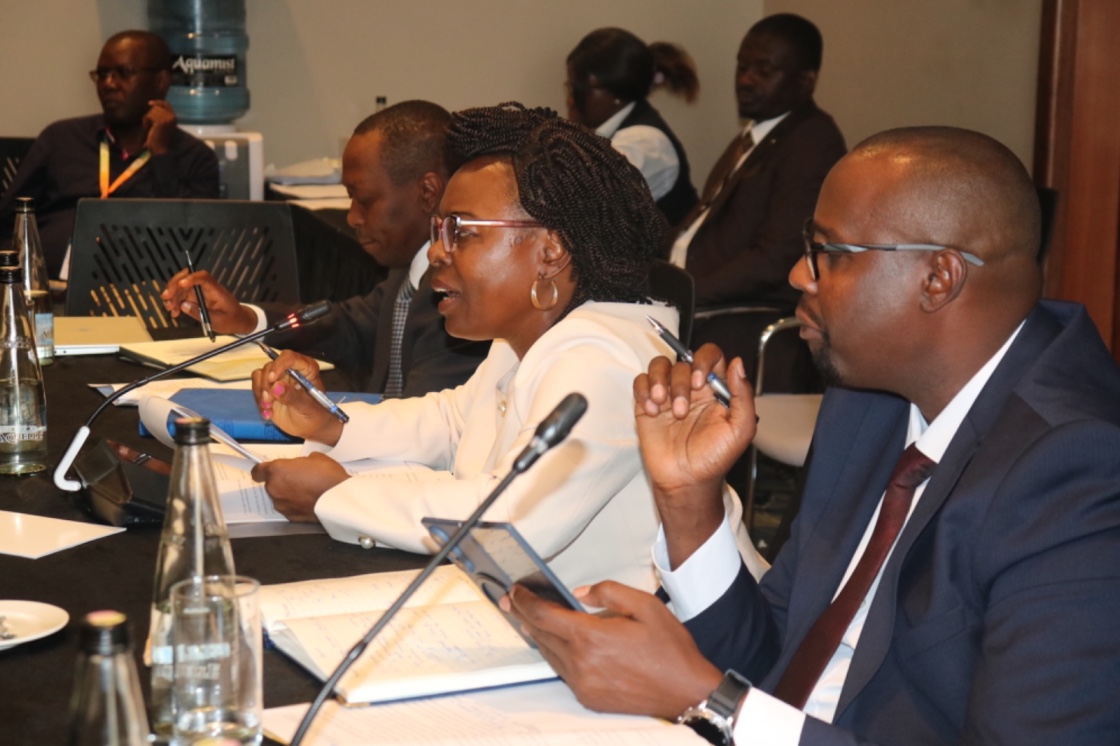
Controller of Budget Margaret Nyakang’o has called for stronger legal safeguards and enhanced oversight to ensure transparency and accountability in the management and sharing of petroleum revenues as Kenya moves closer to full-scale crude oil production.
In submission of her report before a joint energy committee of the National Assembly and Senate, Nyakang’o outlined that her office’s constitutional mandate to oversee funds arising from the Field Development Plan (FDP) and Production Sharing Contracts (PSCs) for Blocks T6 and T7 in the South Lokichar Basin, Turkana County.
Nyakang’o told the lawmakers that the Controller of Budget (COB) office is established under Article 228 of the Constitutionwhich is mandated to oversee the implementation of both national and county government budgets, executing its responsibility by authorising withdrawals from public funds and submitting quarterly reports to Parliament on budget implementation.
The CoB told MPs that her office is not explicitly listed as a stakeholder in the Field Development Plan, noting that all petroleum revenues accruing to national and county governments fall under its constitutional oversight.
"The ministry of energy and petroleum played a central role in the early oil pilot scheme, which yielded valuable lessons on logistics, community engagement, and technical capacity in the preparation for full-scale production," Nyakang’o said.
"My office did not participate in the pilot phase and, as a result, did not document any lessons learned. Nevertheless, I note that the issue of the revenue -sharing framework previously unclear during the pilot gas has been addressed in the Petroleum Act."
The COB raised concerns, calling for greater transparency in the petroleum sector, saying that there is limited disclosure of key agreements, including production sharing contracts, which continues to hinder public oversight of the country’s oil resources.
"There is a lack of transparency where there is limited disclosure of petroleum agreements, including details on production sharing contracts (PSCs), which hampers public accountability and undermines openness," she disclosed.
Nyakang’o further said that the absence of clear monitoring frameworks for the 5 percent local community share of petroleum revenues has sparked fears of possible mismanagement, prompting calls for stronger oversight through legally constituted local boards.
"There is a lack of precise mechanisms for monitoring the 5 per cent local community share is managed via a legally constituted, locally appointed board of management to prevent misuse. Unclear revenue structure, the exact mechanism for county governments' spending of their share of oil revenues is inadequately defined in the current law," Nyakang’o said.
Nyakang’o emphasised that strict enforcement of budget ceilings, timely reporting, and clear legal provisions are critical to promoting fiscal discipline, transparency, and sustainable management of Kenya’s petroleum resources.































Comments
Sign in with Google to comment, reply, and like comments.
Continue with Google